Undercurrent
Undercurrent is rooted in its definition: “an underlying feeling or influence, especially one that is contrary to the prevailing atmosphere and is not expressed openly.”
It stands as a publication for the students who feel invisible, whose stories are often dismissed or softened to maintain institutional comfort. By bringing these narratives forward, the project pushes conversations into spaces where they’ve long been avoided.
-
Amplify the overlooked, silenced experiences of marginalized students at Predominantly White Institutions by bringing hidden narratives of racism and exclusion into spaces where they have long been avoided.
-
Undercurrent—an award-winning, student-shot publication that pairs raw, unfiltered testimonials with an intentional, high-tension editorial design to challenge institutional complacency and give visibility to shared community wounds.
-
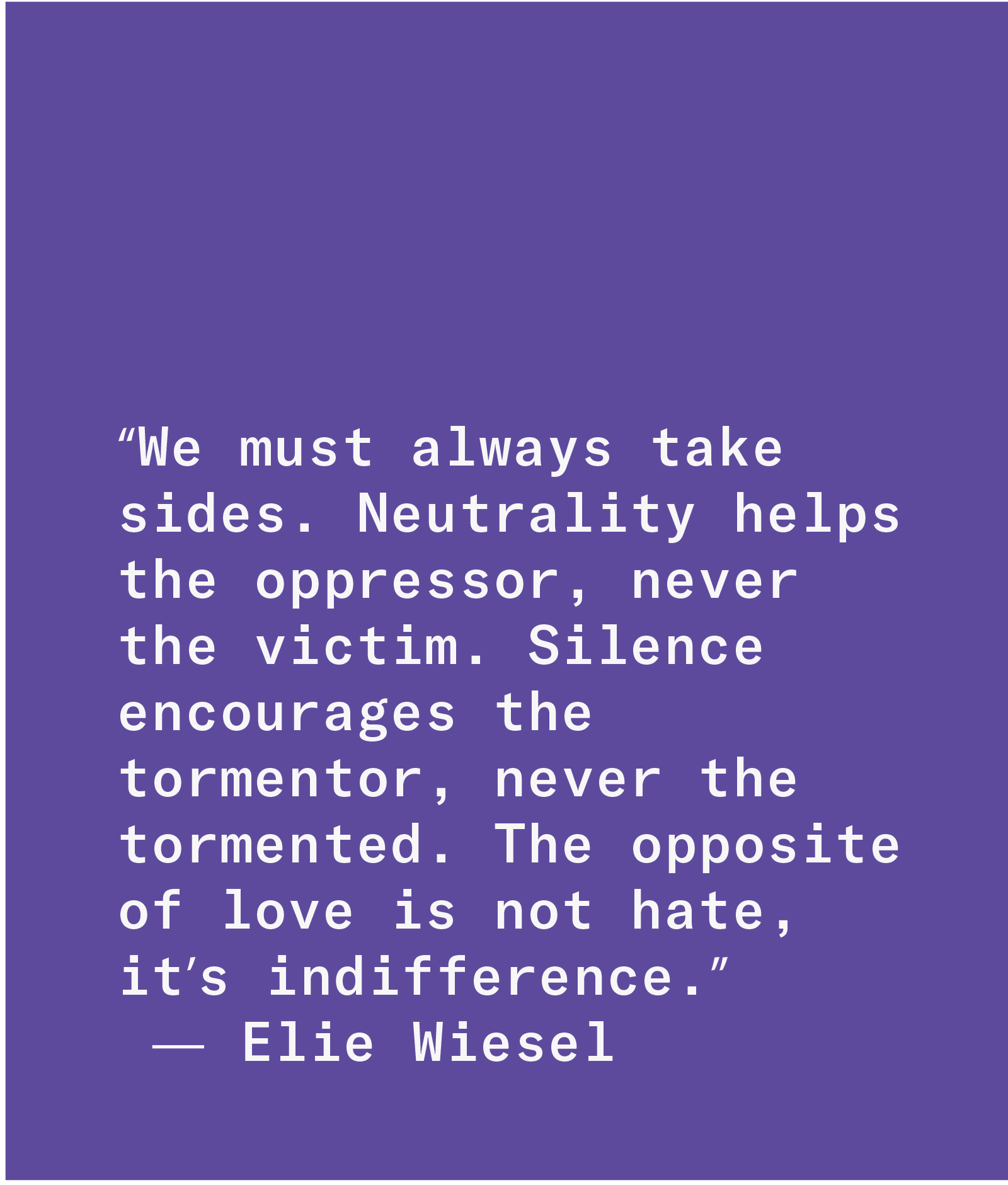
During my junior year at a Predominantly White Institution, this undercurrent became impossible to ignore. Following the election, campus culture visibly worsened as students grew bolder in their bigotry. Slurs like “ngger” and “fggot” were yelled by neighbors in my dorm, shouted from passing cars, trump and confederate flags hung from windows, which were met with laughter or silence rather than accountability. While not everyone actively participated in this behavior, many chose comfort and complacency over speaking up, allowing harm to persist. The mistreatment, exclusion, and lack of meaningful administrative response made one thing clear: we were different, and we were not welcome. Though painful, this reality wasn’t new, it was simply louder.
After publicly sharing how attending TCU had damaged my mental health and sense of belonging, other students of color reached out with their own experiences of racism, exclusion, and discrimination. Many shared stories of being called slurs, treated differently in academic and social spaces, or dismissed when seeking support. It became clear that these were not isolated incidents, but shared wounds carried quietly across campus. From these conversations, the purpose of Undercurrent emerged: to shed light on the social climate at PWIs and amplify voices that are often ignored, using design as a platform for truth-telling, visibility, and disruption.
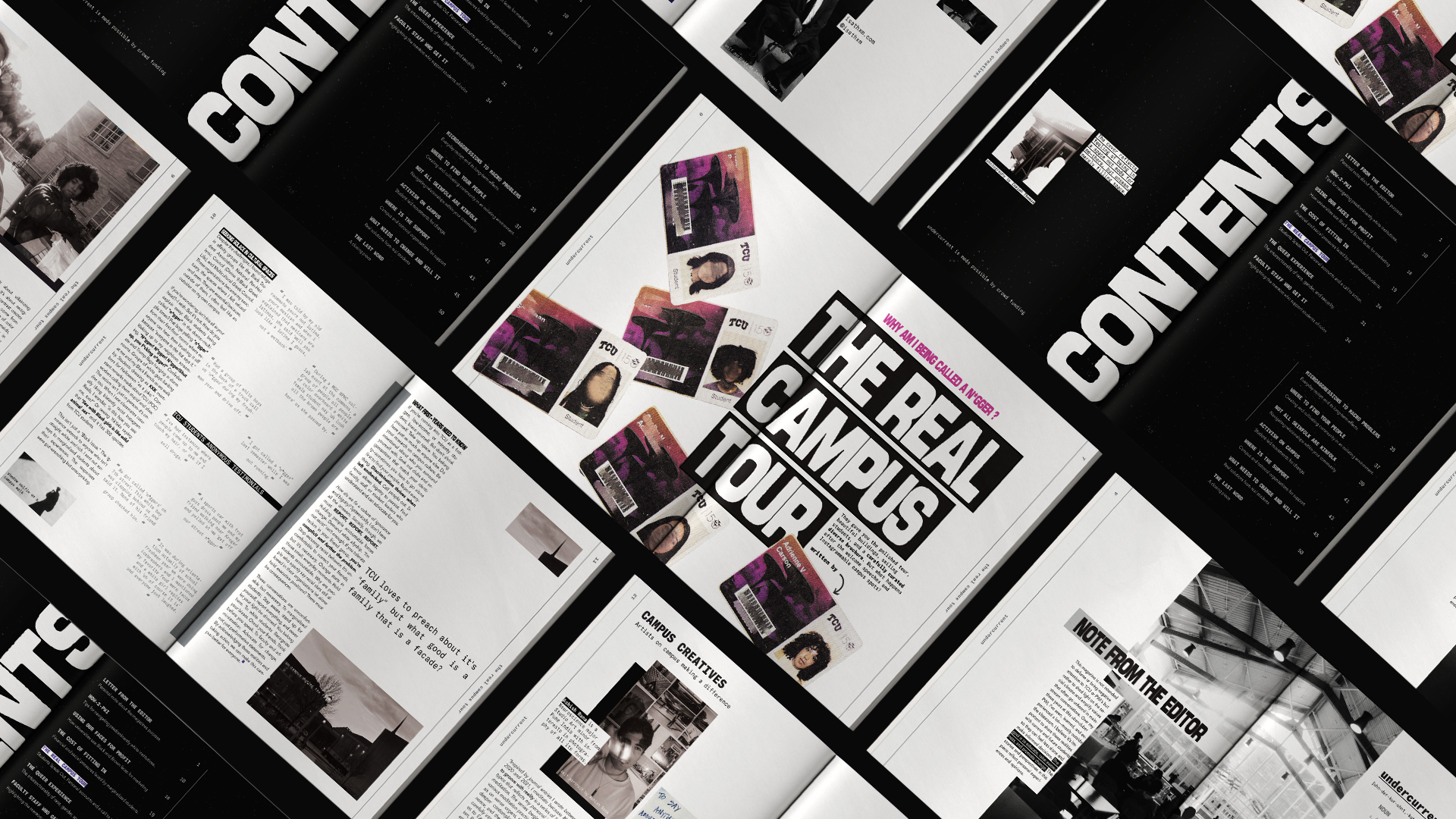
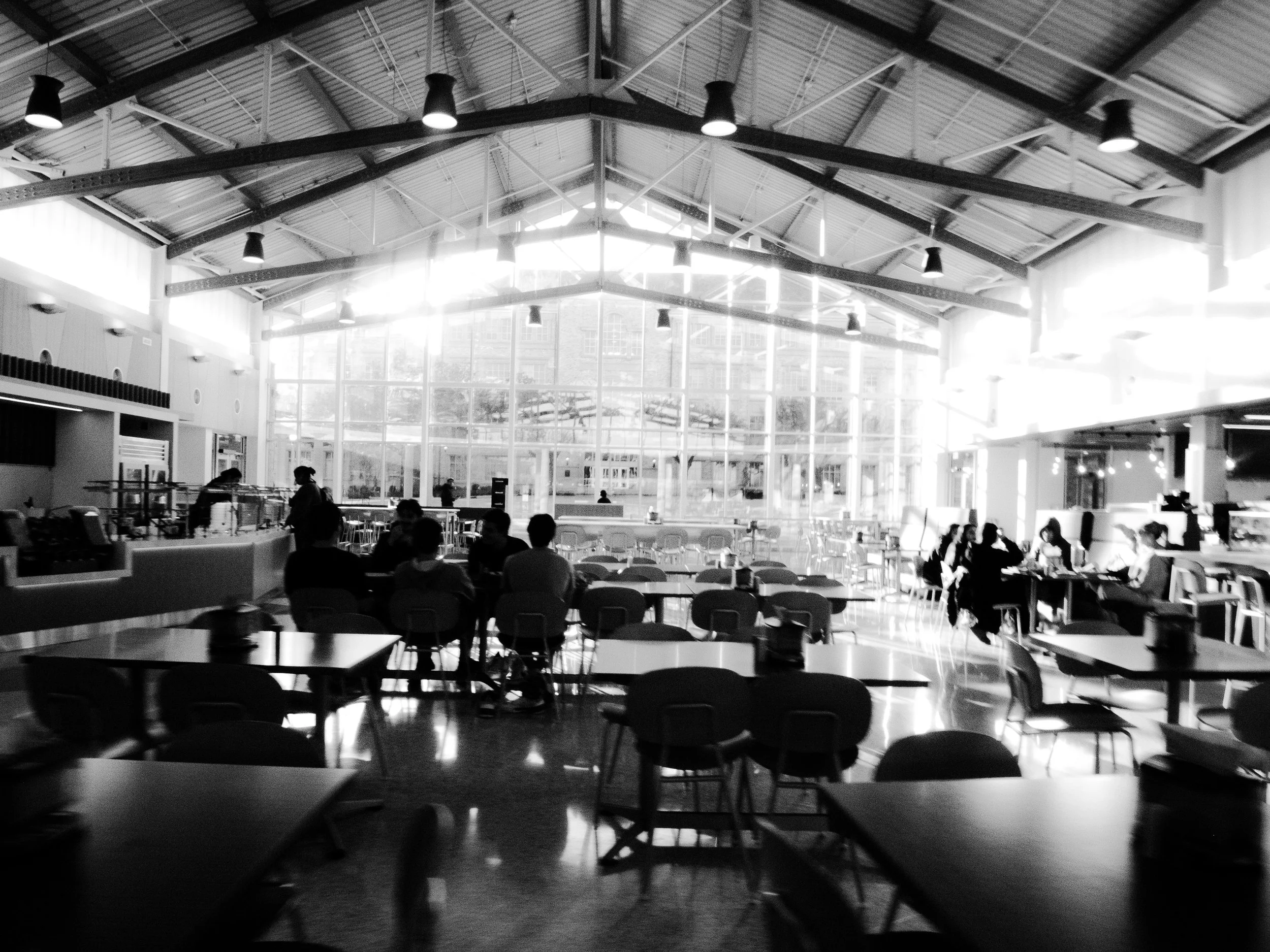
The publication is rooted in both research and raw, unfiltered testimonials from marginalized students, including people of color and LGBTQ+ individuals. Undercurrent is not intended to attack TCU or PWIs as institutions, but rather to illuminate environments that are frequently minimized or overlooked. The project is entirely student-shot (@isathxm, @ashishr4n4, @carsoncreative.co), designed in black and white with intentional restraint. A seven-column grid allows elements to overlap and push against traditional layouts, mirroring the discomfort and tension within the stories themselves. The stripped-down, serious aesthetic reflects the emotional weight of the experiences documented.
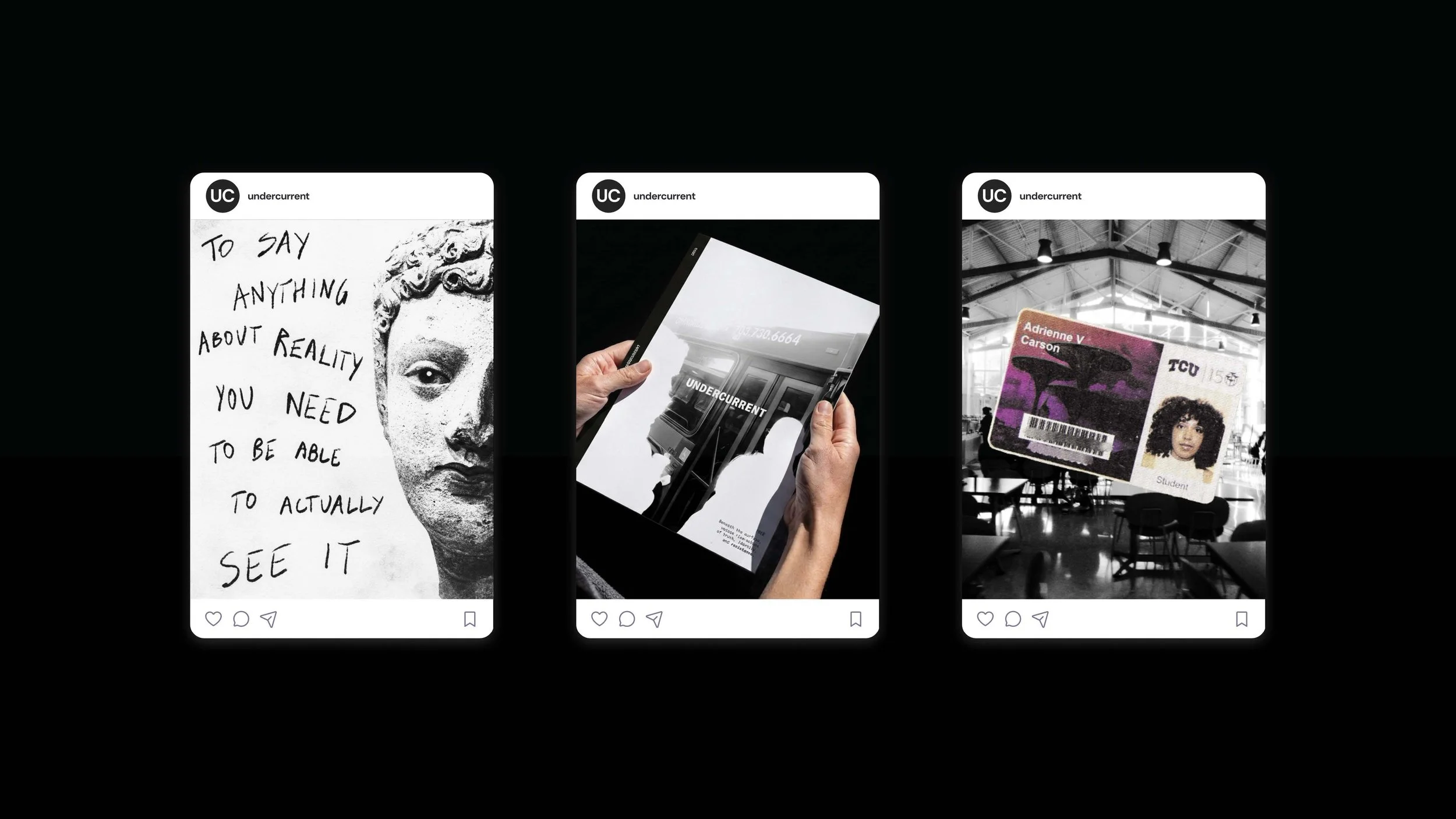
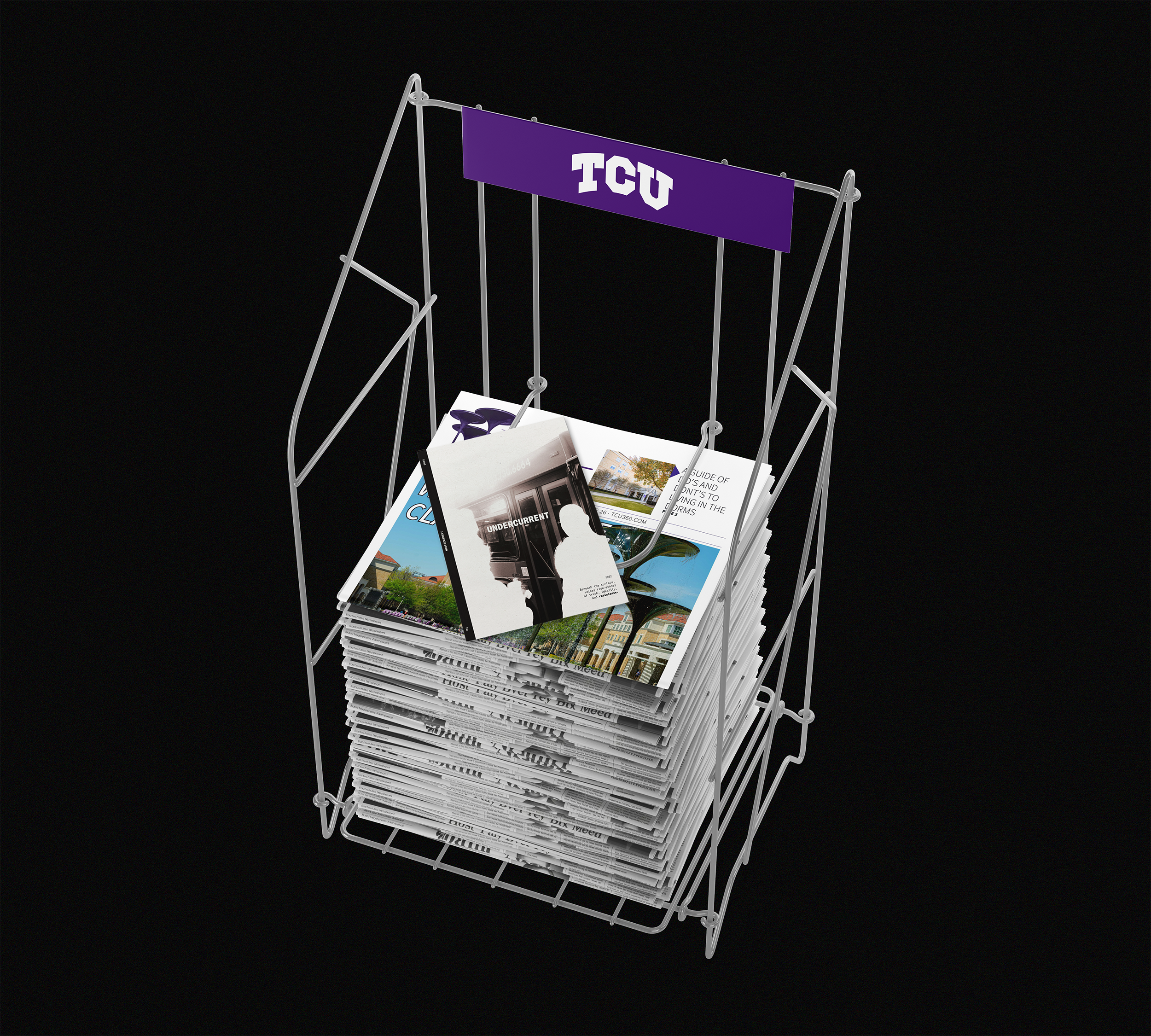
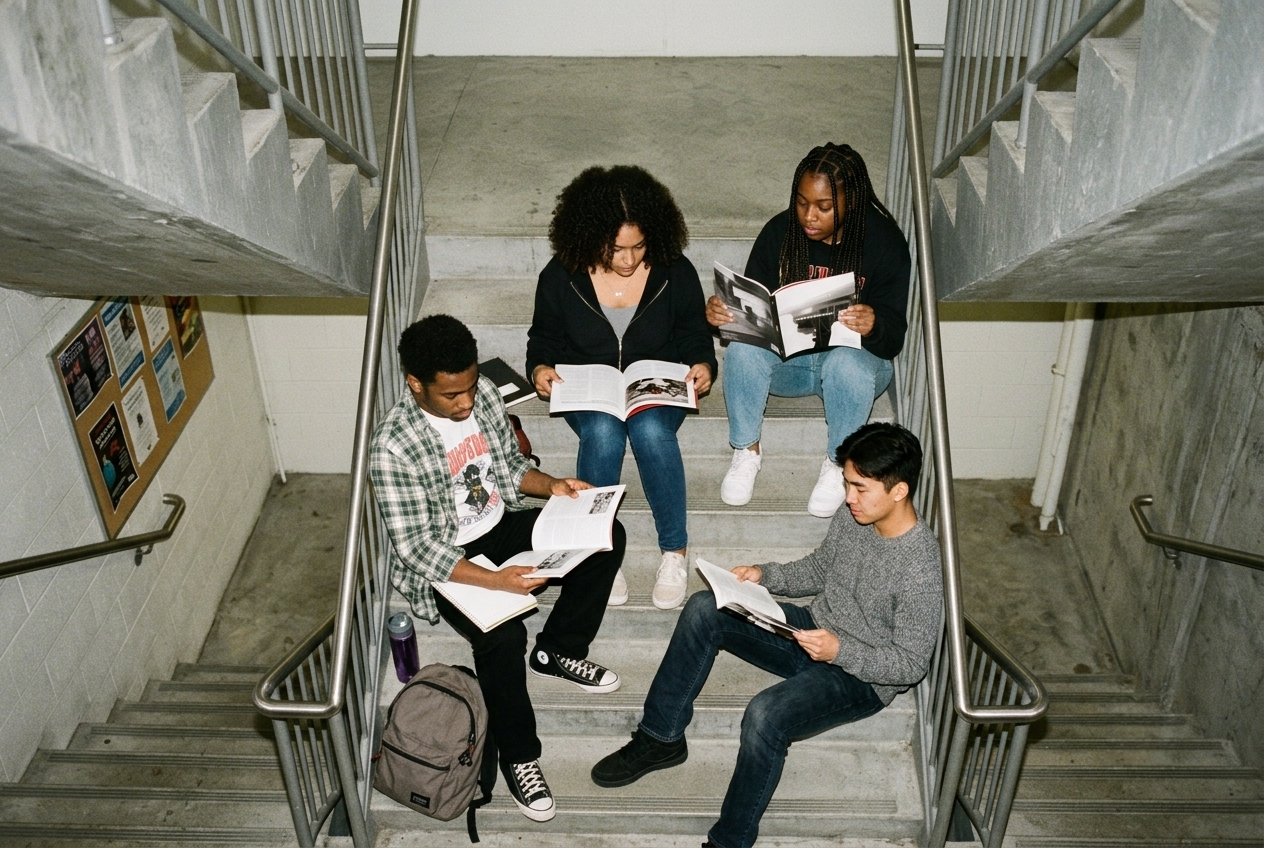
Every design decision—from typography to pacing—centers marginalized student voices with honesty and impact. When shared online, Undercurrent quickly gained traction, reaching over 11,000 views, earning more than 50 reposts, and prompting numerous requests for physical copies from students and alumni. Many shared that, for the first time, they felt seen and understood; others expressed that the publication opened their eyes to realities their peers navigate daily. Undercurrent exists as both a mirror and a catalyst, validating lived experiences while challenging the silence surrounding racism and exclusion at PWIs by making visible what has always existed beneath the surface.
PUBLICATION DESIGN
Awards: Featured in TCU Graphic Design Society of Creative Excellence Exhibition 2025, AAF Fort Worth- Silver Addy